Few wellness rituals are as timeless as soaking in a warm Epsom salt bath. Many people swear by them after a long day, an intense workout, or simply when life feels overwhelming. But what does the science actually say?
The short answer: there's good evidence that warm baths promote relaxation, but less certainty that Epsom salt itself is responsible for all of the reported benefits.
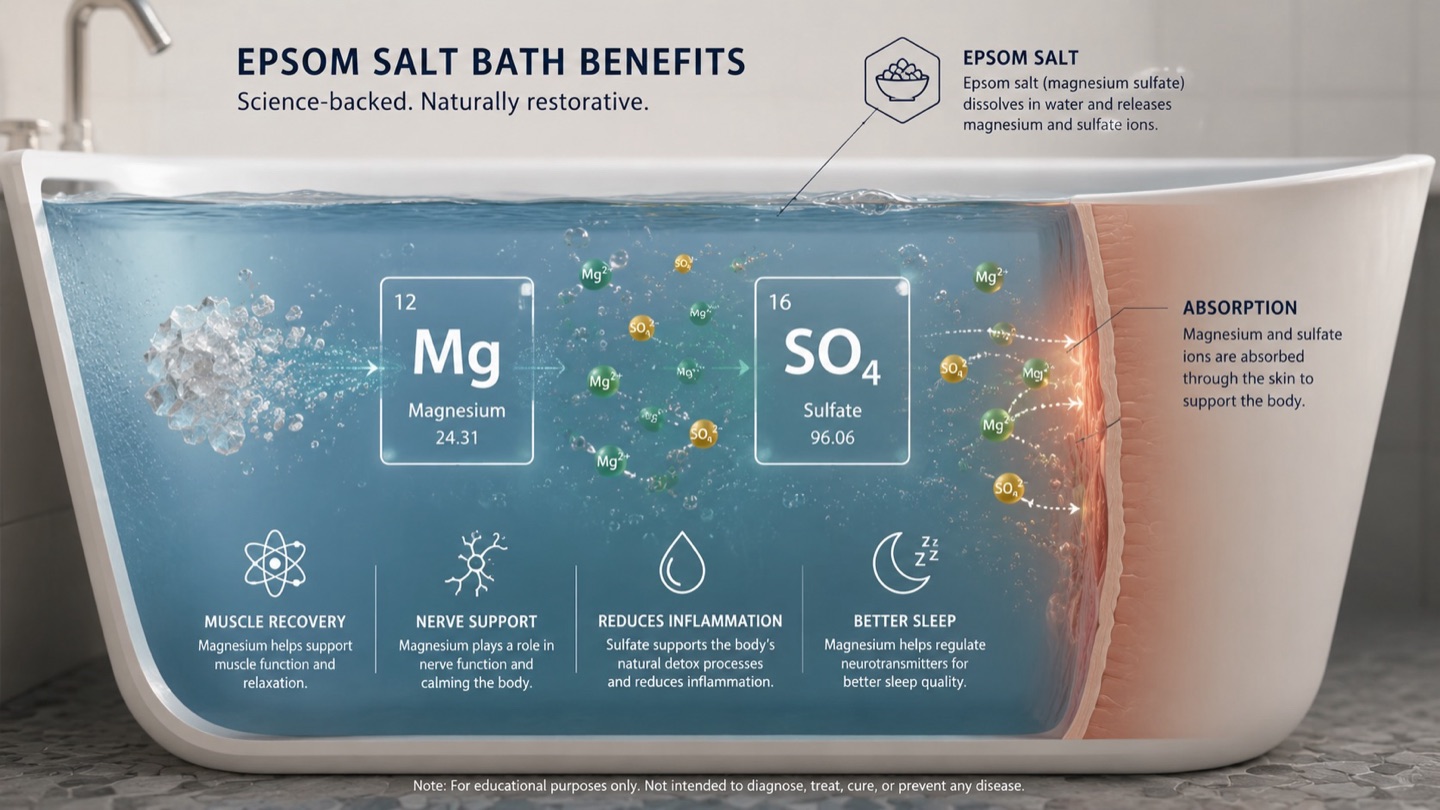
Epsom salt is simply magnesium sulfate, a mineral compound that dissolves in water. Magnesium plays an important role in muscle function, nerve signaling, and hundreds of other processes throughout the body. The unanswered question is whether enough magnesium is absorbed through the skin during a bath to make a measurable difference. So far, research has been mixed, and scientists generally agree that more high-quality studies are needed.
That said, many people report feeling less sore, more relaxed, and sleeping better after an Epsom salt soak. Some of those benefits likely come from the warm water itself, while others may be related to the magnesium — or simply the act of taking twenty uninterrupted minutes to slow down. Whatever the reason, it's a ritual that many people genuinely enjoy.
One area with some encouraging research is skin health. Studies of magnesium-rich mineral baths have shown improvements in skin hydration and barrier function, suggesting these types of baths may be beneficial for dry or irritated skin.
At Bodylogic, we don't believe Epsom salt baths are a miracle cure — and we don't think they need to be. If a warm soak helps you relax, eases post-workout stiffness, or simply gives you permission to unwind after a busy day, that's a meaningful benefit all on its own.
Our Recommendation
Add about two cups of Epsom salt to a warm bath, soak for 15–20 minutes, stay hydrated, and enjoy the opportunity to slow down. It may not be a magic solution, but it's an inexpensive, low-risk wellness ritual that countless people have found worth making part of their routine.
References
Proksch E, et al. Bathing in a magnesium-rich Dead Sea salt solution improves skin barrier function. International Journal of Dermatology. 2005.
Tarsitano MG, et al. Effects of magnesium supplementation on muscle soreness: A systematic review. Journal of Translational Medicine. 2024.
National Institutes of Health, Office of Dietary Supplements. Magnesium Fact Sheet for Health Professionals.
For educational purposes only. Not intended to diagnose, treat, cure, or prevent any disease.
← Back to Blog